



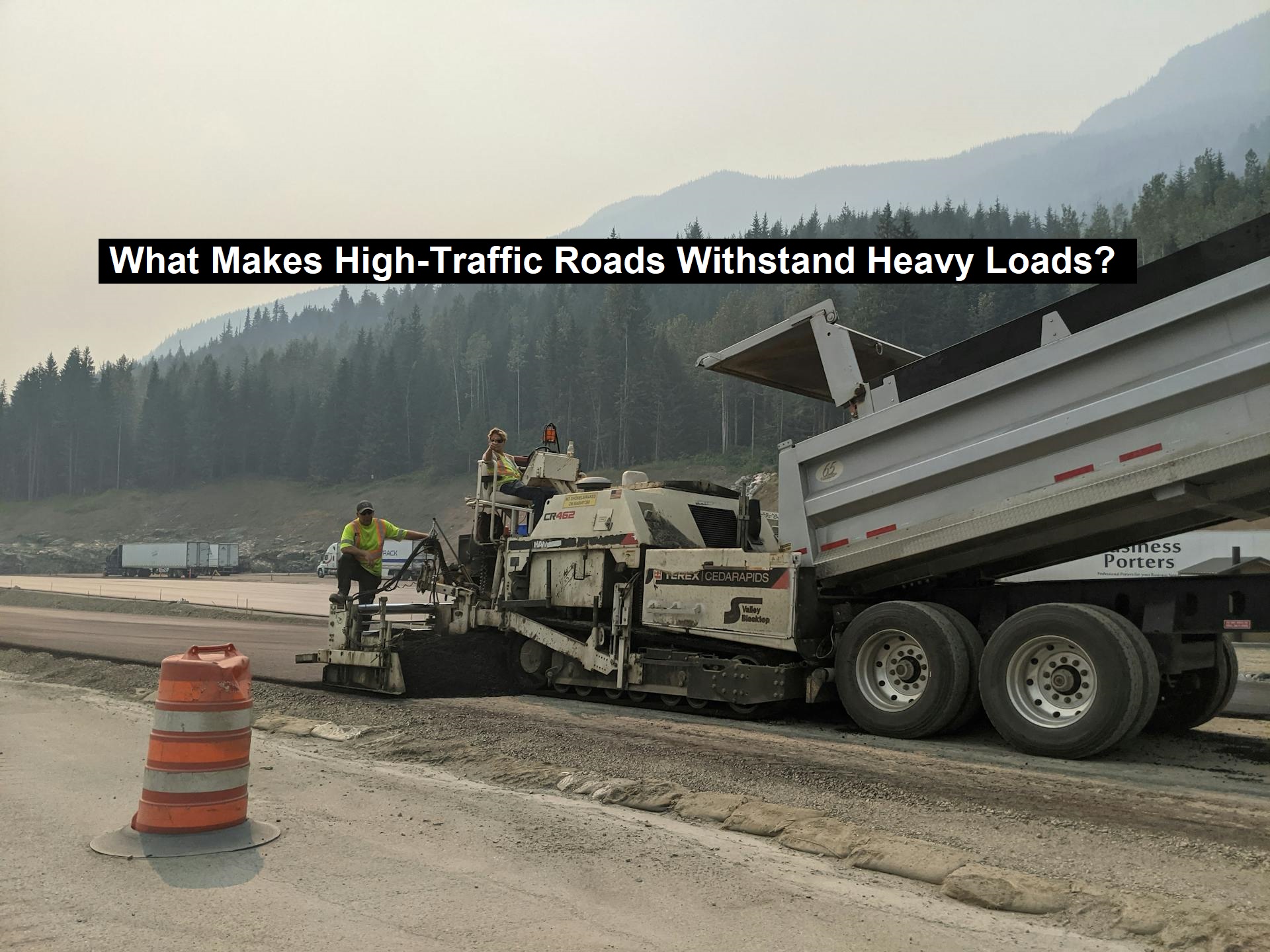






What Makes High-Traffic Roads Withstand Heavy Loads?
- Engineers choose from different materials to determine road strength and longevity.
- Asphalt is the most common road material.
- Concrete costs more but makes roads much stronger.
- The amount of traffic, average weight of vehicles, and speed at which they travel all factor into expected road wear.
Road construction can be a source of massive frustration. It’s also expensive. While drivers are thinking of how to get home or when they need another car inspection, engineers set out to build or rebuild roads, and they have a lot to consider. How do they make high-traffic roads that can stand up to heavy loads? That’s exactly what we’re going to explore today.
How Materials Shape Road Toughness
You can split road considerations into two categories: materials and design. Ultimately, the two play off of each other, but design choices make more sense after first considering the most common materials used in road construction.
Asphalt
Asphalt is by far the most used material in road construction. From highways to parking lots, you can find it everywhere.
Asphalt is usually made from aggregate mixed with an adhesive layer, often bitumen. This design allows for different aggregates that change the thickness, toughness, and flexibility of the final product.
Typically, asphalt makes up the top layer of a road with various base layers underneath. Those layers determine how thick asphalt should be, which aggregate works best, and how the asphalt will perform over time.
Aggregates
The most common aggregates in asphalt include sand, gravel, and crushed stone. Sand makes for the most flexible asphalt, but it tends to sacrifice durability. Gravel and crushed stone are more common because of price and toughness. Mostly, the size of the aggregate determines how thick the asphalt will lay, and that sets the toughness.
Concrete
Concrete is much tougher than asphalt, making it an ideal choice for many road options. But, concrete also costs considerably more to use, limiting its use across major road systems.
Concrete forms a stable, strong layer for a road, and in many cases, asphalt is laid above the concrete for the sake of standardizing road traction and water mitigation.
To optimize costs and performance, concrete pours typically target areas that have the highest traffic and heaviest loads. More specifically, areas where traffic moves or stops the most will see more concrete.
This includes stop lights on major roads, on ramps and off ramps on major highways, and downtown areas that see the most congestion. Concrete is also common on many bridges and suspended driving structures that need more durability.
Strategically using concrete wear roads see the most wear creates better cost-efficiency in road construction, especially when considering long-term repair costs.
Steel
Finally, steel (mostly in the form of rebar) can reinforce road layers to create the highest levels of strength. This dramatically raises the cost of each foot of road, but it comes with the most durability and reliability currently available.
You will mostly find rebar in suspended road structures. Interchanges, bridges, and other suspended driving areas need the extra strength and justify the cost of steel. Putting rebar into concrete and/or asphalt that is directly on earth is far less common.
Read: How to Build an Effective Preventive Maintenance Plan for Equipment Reliability
Design Concepts for High-Traffic Roads and Heavy Loads
When it comes to road loads, the simple volume of traffic and weight of vehicles only tells part of the story. A more complete picture looks at the amount of time any section of road is under load and how much weight is on that section of road.
Rather than counting the number of vehicles that might drive over a specific point, instead count how much time that point spends under weight.
Thinking this way, slower traffic creates more wear and warrants stronger builds than faster traffic of similar volumes.
With that in mind, we can look at how road designs account for load distribution and why certain material choices are more common on certain types of roads.
Highways
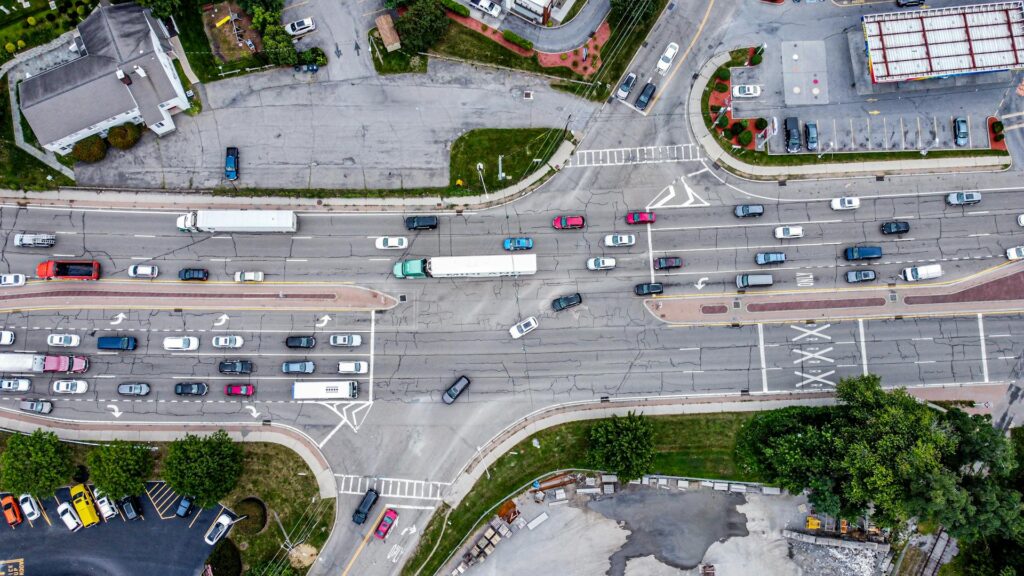
Highways come in many shapes and sizes. A rural highway with scant traffic does not need the same design as a major interstate in a downtown metropolis. Traffic volumes will matter, but overall, highways see the highest average speeds. That means each vehicle spends less time on any one spot on the road. Effectively, highways can handle more traffic with less robustness in their design.
Stopping Points
Here, we see the opposite effect. When vehicles stop at stop signs, traffic lights, off ramps, and points of frequent congestion, the roads suffer a lot more wear. It matters less how many vehicles travel through a point and more how much time each day the road spends under load.
Engineers consider time under load, and as it increases, designs match. Road construction can dig deeper to create more layers of earth, dirt, and stone under the construction materials. This increases stability and makes for a stronger road.
Additionally, concrete and stronger aggregates see more use at stopping points, especially when heavy vehicles are more common. Traffic lights on main roads in cities merit more concrete and more robust structures.
Mid-Speed Traffic
In between the two, we have mid-speed traffic. Think of town roads that don’t have backed up stops. These are roads where you might hit stop signs, but you don’t have to wait for a line of cars to get through.
These roads often need the least robust designs (aside from rural highways on flat land). Traffic tends to be lighter with fewer stops, all reducing long-term wear on the road. In these cases, crews can level the ground and lay a relatively thin layer of asphalt to meet needs.
Road Life
Ultimately, design choices can help with longevity and cost-efficiency, but no road lasts forever. Beyond materials and designs, repair schedules and tools like asphalt crack filler play into these considerations to figure out the best way to build and maintain a road over time.